Wednesday, 17 April 2013

'Quick' Chartership Update (Part 2)...

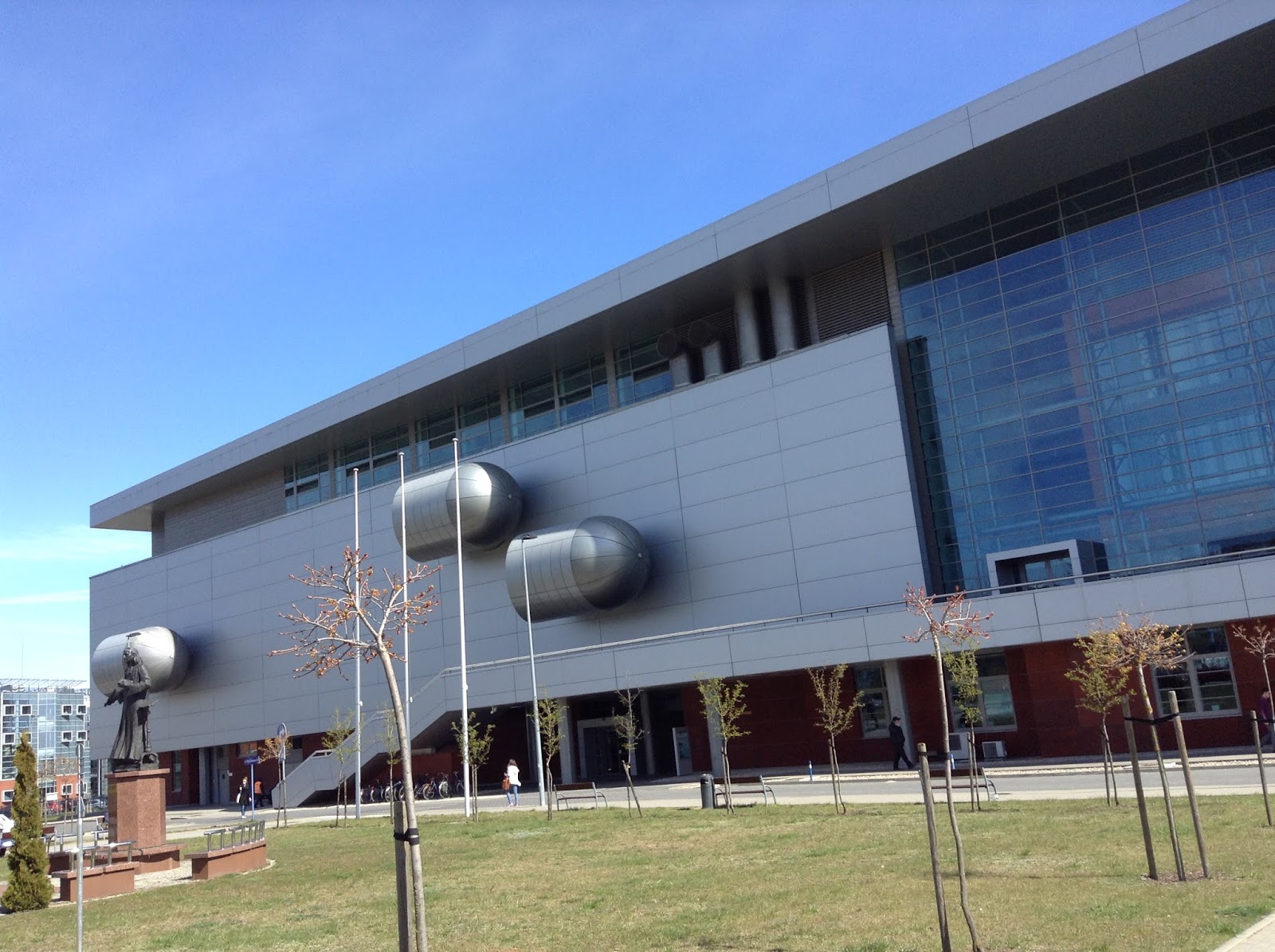
Some 550 years ago, Rotterdam was the home of Desiderious Erasmus - the Dutch Renaissance Scholar and Humanist who is revered to this day within academia for his efforts in preaching a message of tolerance, freedom of expression and respect for others. Erasmus remains Rotterdam's most famous son and it is a testament to his legacy that Holland's second city is such a chilled-out and culturally diverse place to this day. Rotterdam has become known as the "Gateway to Europe" hosting Europe's busiest port. Whilst the city was practically obliterated during the Second World War, it now also boasts some of the most cutting-edge architecture in the world.

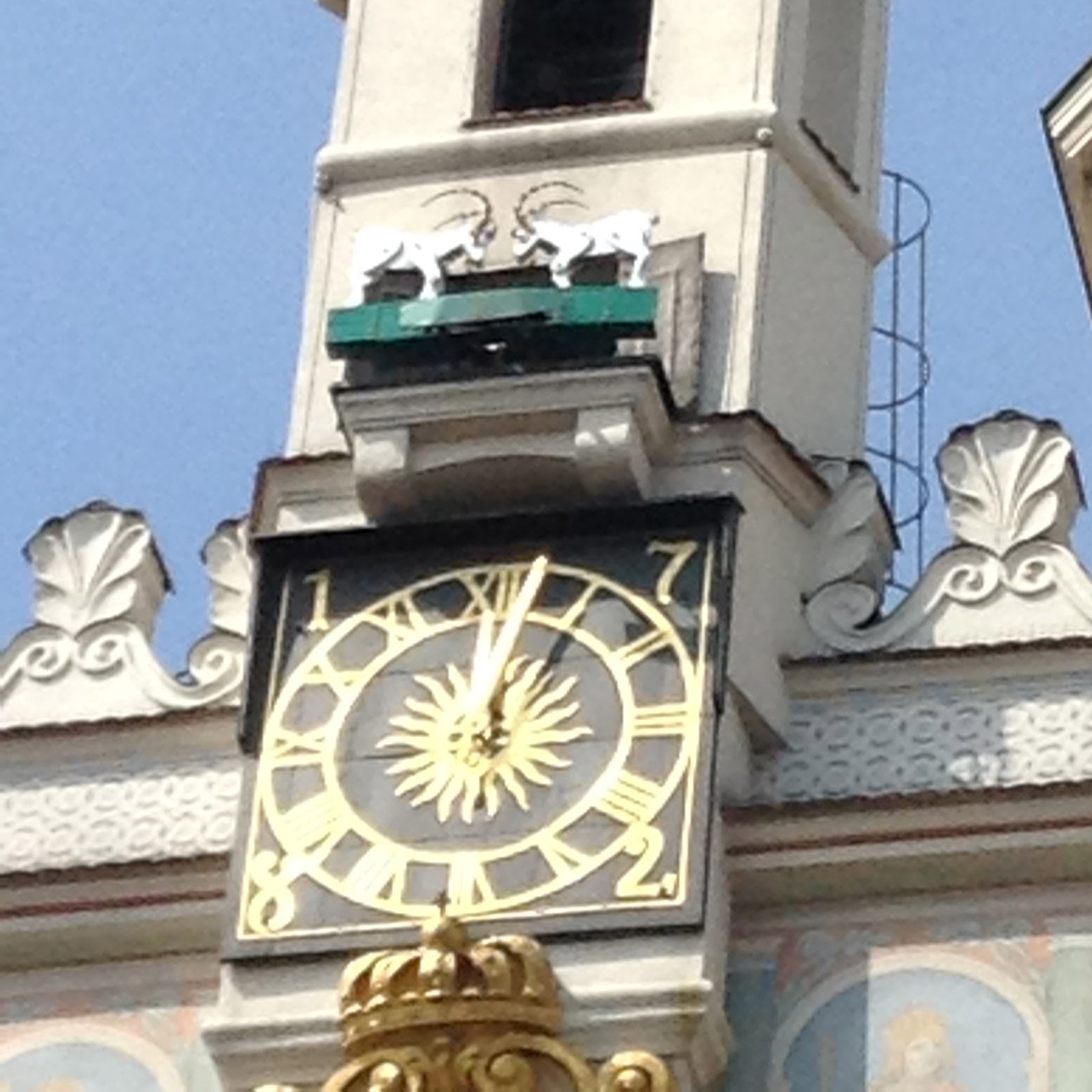
This could be Rotterdam... or anywhere
Rotterdam has many fantastic libraries. The problem nowadays is trying to find them! With 19 of the city's 25 public libraries having closed in recent years, aside from the massive central library (below) it is often hard to pick them out.

Bibliotheek Rotterdam - the central library
attracts some 3.4 million visits per year
What does have to be said, however, is that the central library itself is a captivating (if not downright magnificent) place! In Part 1 of this (inexcusably long) blog post, I wrote about libraries which do things, places which inspire users to want to better themselves and to participate in the activities which they offer. It is a huge building to explore, for a start and from the giant chess board in the foyer (see below - N.B. from what I saw, Rotterdammers are obsessed with chess!) to the music practice rooms on the 6th floor, the library strives to invite users to engage with their surroundings at every step. This idea of a library which is "alive" extends to the living roof, where a bee-hive was installed in 2012 to celebrate 'The Year of the Bee' in Holland!

Chess players and spectators outside the Bibliotheek's Cafe
The music/media area includes access to the Musiekweb database
which offers the choice of some 4.5 million tracks
The Rotterdam suburb of Spijkenisse, a few miles south-west of the city centre, is home to perhaps an even more incredible library building: the so-called 'Book Mountain'. Heralded as "the biggest bookcase in the world", this is a library with a keen focus upon sustainability, with natural lighting used as much as possible, trees lining the pathways and shelving made of recycled plastic bags (I kid you not!). Since opening in October 2012, the building has already been nominated for a raft of international awards, including the Red Dot Design Award (which it won) and the London Design Museum's 'Design Museum of the Year' Architecture Award. 

Again, participation is the key here. The pyramid includes small enclaves which host IT teaching facilities, classrooms, special collections, a gallery and meeting spaces - enticingly hidden within the pyramid. For those intrepid enough to make it to the top, there is also a cafe and (inevitably) more chess!

MVRDV's 'Book Pyramid' in Spijknisse, a suburb of Rotterdam

An entrance into the pyramid leads to a small gallery
hosting an international photography exhibition
Given that (..and possibly because) Rotterdam is host to such facilities as the central Bibliotheek and the Book Pyramid, it is a sad to see that public library provision elsewhere is just so sparse. Some of the city's residents have taken matters into their own hands. I saw an example of this at Rotterdam-West - namely the enchanting Lees Zaal community project:

Lees Zaal is Dutch for 'Reading Room'

Bird box book shelf at Lees Zaal!
It was interesting to get the perspective of those volunteers working in this community facility. They received criticism from some quarters for taking on a role which some view as the responsibility for the Dutch Government to provide. The response of campaigners was to point out that ensuring a community "reading room" of some description was retained in this area was simply too important to get angry about (noticeably, staff do not refer to the project as a library, even though it has an open book collection). The project has secured support from Stichting Doen, a lottery-funded scheme encouraging sustainable community projects and Woonstad Rotterdam, a city-wide housing project. 

Visiting some of Rotterdam's other cultural hubs of convinced me that this is a city which still values its libraries, despite their diminishing numbers. Below are two examples, the first from the Netherlands Architecture Institute (NAI - the outside of which is pictured at the top of this blog post). The second is one I stumbled across whilst exploring the city's art museum:

The NAI Library contains around 60,000 volumes
with a highly international range

The charmingly prefabricated library at
Boijmans, Rotterdam's main art museum

Monday, 1 April 2013

'Quick' Chartership update (Part 1)...

So... it has been a few months since my last blog post and with CPD Things long done & dusted, I aim to now seamlessly morph these pages into my Chartership blog. My portfolio is coming along (...slowly!) and I have received some good advice lately on how to go about fulfilling some of those areas where I have been finding it trickier to gather evidence (quick tip: always store any emails and other correspondences which include feedback on your work). I gave a presentation to colleagues who are also either currently chartering or considering Chartership, explaining the relevance of international opportunities to CPD and explaining how I have been able to use the experience and knowledge I gained through my staff exchange to the US last year in my portfolio. 

I also had a look at the latest #Chartership Twitter chat. I was interested to find out there are some significant changes to Chartership procedures which will be announced in full at this year's Umbrella Conference and implemented in Autumn 2013. It is not yet clear what the impact of these changes will be for those of us already registered for Chartership but the New framework of qualifications pages on the CILIP website mention a "transition plan to ensure that candidates currently working on qualifications are not disadvantaged". I'll continue to plug away at it in the meantime but thought I would also take this opportunity to note down a few thoughts on libraries in 2013..

The sad fact is that much of what I have read about libraries this year has been frankly gloom-ridden. News that the UK "lost more than 200 libraries in 2012" at the start of the year did little to warm the cockles during the bitter (and seemingly endless) cold snap we have been experiencing here in the UK. 201 public branches closed last year, to be precise, according to the Chartered Institute of Public Finance and Accountancy (CIPFA) and what remains of the public library system is still as fragmented as ever. This was compounded by Eric Pickles' approval of the Arts Council's Report on Community Libraries. For some, this report is a cunning piece of political strategising, turning those who chose to staff volunteer libraries (often impassioned campaigners who are simply doing all they can to keep their libraries open) into unwitting foot-soldiers, leading the charge towards what commentators have described as the death of the library as we know it.

What has been a constant source of encouragement has been the dogged determination of some library campaigns. Though dismissed as "luvvies" by Pickles, there remains a fierce backlash from protestors against the Government's policy on libraries which will not be silenced. The image of Friern Barnet Library campaigners, along with members of the Occupy Movement, taking over a 'One Barnet' council meeting springs immediately to mind, along with marches and protest held across the length and breadth of the country (Newcastle and Gloucestershire as examples). Far from the image
Pickles imagines, a more appropriate comparison might be, say, Forrest Gump's Lieutenant Dan, with campaigners hollering against the tempestuous storm to get their voices heard!

Lieutenant Dan in Forrest Gump (Paramount, 1994)
Are libraries going the way of high street retail? The demise of big names like HMV, Jessops and Blockbusters hit the headlines earlier this year. Let's not get too sentimental about this, tough. As much as those who wax lyrical about how they miss the evocative sights and smells, the feel of the products or the experience of browsing these stores, retailers (as the name suggests) are about one thing and one thing only, namely selling stuff. In simplistic terms, when these shops fail to adapt sufficiently to suit prevailing market conditions, their revenues from these sales fall and eventually their physical shops fall to competition from online alternatives (who do not have the same high rents [nor even taxes, often] to contend with). Libraries, on the other hand, have never depended upon users borrowing books to survive (at least not in a direct sense). Those who hold the purse-strings may well look at basic statistics like book issues when making decisions on library funding, yet this has never really been what the library is all about. The Guardian chat in January on 'What should a library look like in 2013?' attracted some 330+ comments, predominantly from activists with productive and inspiring ideas on what needs to be done to improve the perception of the importance of libraries in this day and age. Phil Bradley points out the critically of the community aspect of physical libraries, stating:
"An attack on a library service is nothing less than an attack on the community that it serves, and a closed library reduces the ability of people empower and improve their lot."
These were just some of the thoughts swirling around in my brain when I took a tour of the City Business Library (CBL) back in January. The CBL offers access to a variety of business databases, including FAME (Financial Analysis Made Easy) and Mint free of charge, predominantly to business practitioners, students and journalists. It is, however (to the surprise of many) a completely public, local authority library. Its location within the Guildhall in the City of London leads many to the assumption that it is a subscription-based facility, yet anyone can use it. The library also hosts between 60-80 events per month, ranging from 'Yoga for desk workers' to a graduate job club. Knowing that business databases, in particular, are an expensive resource, I asked the librarian who was giving the tour of the CBL whether high usage figures are needed to justify subscription to these. Her response was that although these were a consideration, decision-making processes were largely based upon discovering what users actually did with the information they found and what the outcome was of their research. Extensive feedback is collected from users on precisely this. For some, it may have helped them to find employment, whilst another example was given of entrepreneurs coming in to learn about the state of the market for particular products, then being able to set up businesses in appropriate areas.


The City Business Library is located in London's Guildhall

The CBL offers a range of careers advice sessions
many of which are practically free of charge

I also visited Shepherd's Bush Library which features a 'Work Zone' set up in partnership with Job Centre Plus, Ealing Hammersmith & West London College and others to actively help job-seekers. This provides training in key areas such as e-inclusion, literacy and numeracy, as well as apprenticeships and diploma courses (primarily focused around retail as the project is closely linked with the adjoining Westfield Shopping Centre). The service also offers financial services, such as debt support and benefit advice (services which are all the more important now, given the current political agenda of welfare cuts, compounded by the slashing of the Citizens Advice legal aid budget from £22m to £3m).


Shepherd's Bush Library's 'Work Zone'

Bright & shiny shelving at Shepherds Bush Library -
officially opened by Jeremy Paxman in 2009


These visits got me thinking more about libraries which offer users services which enable them to do things which have a real and tangible value and whether this implies a less passive role for the libraries of the future. Yet libraries have always provided services above and beyond the basic function of enabling access to collections, of course. The thing that struck me most about Westminster Libraries' open letter to their local Councillors in January was the sheer range of services offered, with at least 15 separate things which the library service can offer listed (this online booklet also outlines these, with training courses, reading groups and an 'Ask-a-Librarian' service featuring prominently).

A shift from the traditional role of libraries is also not implying that books will cease to be an integral part of what the physical library offers. As stated in the Guardian chat mentioned above, "...video didn't kill the radio star and the ebook won't kill libraries...." (courtesy of @RubyMalvolio)...or as Stephen Fry puts it, "Books are no more threatened by Kindle than stairs by elevators". In his LILAC conference address, Steven Wheeler noted how "books and ebooks are operating in a different ecosystem" and British Library CEO Roly Keating expands upon this, talking of a "revolution of blended media, with people switching back and forth between print and digital". The proposals outlined in the Seighart Review which looked into E-book lending and libraries could have a positive effect on physical libraries, recommending that fully-formed digital strategies will help to encourage communication with members and draw them into the physical library building. A greater role for libraries and librarians in encouraging open access publication is also expected and this is likely to translate to other library contexts too, for instance with more support for the publication of open access research in an academic environment.


Providing as many activities in a library which give the user opportunities to develop alongside some of the more traditional functions of the library (as a place to access information resources, to encourage independent thought and learning, as well as to support community cohesion) is the real challenge to libraries for me. In my opinion, this can only be achieved through the harmonious conflation of trained (and highly flexible!) staff, effective systems and quality architecture. I considered all of these elements in the dissertation I wrote for my MSc (completed in 2010) and have continued to explore the third of these factors, library design, in particular. 

I have also continually tried to find libraries which are doing something a bit different. My most recent travels took me to Rotterdam where, typically of Holland, libraries are characterised by bold and unique architecture - more of which to follow in part two of my year so far...


Rotterdam: often described as an "architect's playground"


Friday, 30 November 2012

The final curtain...

And now, the end is near; And so I face.. Thing 23: What next?

What more fitting way to tackle this final task than with a few words of inspiration from Mr. Frank Sinatra?! (..and no - before anyone asks, I promise I've not been at the gin!).

Photo All About Jazz
I'll state my case, of which I'm certain.

Taking part in CPD23 has made me more appreciative of what a truly varied and dynamic profession Librarianship is. Through the visits I've done, by connecting with some fantastically interesting and innovative library people, attending events and generally opening myself up to new perspectives, I have come to learn what values are important to me and to contemplate just what I want to achieve in my library career. I have begun to realise just how great the threat to public libraries, in particular, is and to understand that it is up to information professionals from across all sectors to speak up for libraries.


I've travelled each and every highway;

I've wandered a fair bit in the course of this blog and have now lost count of the number of libraries I visited in the past six months. Although it has been exhausting trying to keep a record of this at times (uploading photos, wrestling with Blogger's often rather erratic tendencies, yada yada..) I'm so glad I did it! I feel I will be able to look back on this journey with a fair amount of pride in years to come (and cringy-ness too! Wouldn't be the same without the cringy-ness!). I would recommend a staff exchange to anyone, if you do get the opportunity, whether through a scheme operating at your own work, through LIBEX or organised independently. It was great to meet up with some of the staff I met during my time out there in the States when they came to the UK just a couple of weeks ago. I have continued to research the things I found out while I was in the US and am now just starting to help to put some of these things into practice in my own workplace. 

Regrets, I've had a few;

Promise not to rant on but the one major regret I would like to mention, looking back, has been not putting more thought into the design of this blog from the start! As a tip to anyone considering participating in this scheme next year - keep it simple!! Half of this blog has ended up in a font size which ostracises many people over the age of 40 and editing in Blogger is quite unpredictable at the best of times (have I mentioned?) so trying to mess around with different templates, layouts and things will just make matters worse! (Try Wordpress, maybe..)

I planned each chartered course,

Pretty sure CILIPquals weren't exactly what Frank Sinatra had in mind in this verse but finishing my Chartership is very much the next step along the byway for me. The same goes for many other CPD23 bloggers - TheatreGrad, It's not about books or being quiet all the time, Get Chartered! (..naturally) to name but three. I'm chuffed that I have already managed to achieve some of the goals set out in my Personal Professional Development Plan (PPDP) just through the experiences outlined in this blog, including those relating to broadening my knowledge and understanding and showing my commitment to professional develpoment. My other goals focus upon leadership skills, assertiveness and learning to evaluate service performance. I am also working my way through the Professional Knowledge Skills Base to try and identify other areas where I could improve. As an aside, I noticed an interesting quote from Liz Jolly on the latest Twitter #Chartership chat which explained a Degree/Diploma/Masters in LIS as the theoretical element of qualification, with Chartership itself as the practical part. Think that about sums it up.
  
To say the things he truly feels;

Hyperlinked Carliebrary posted her brilliantly earnest Future Librarian's Promise earlier this week and much of this rang true for me, for instance:
  • I refuse to say "librarian” apologetically
  • I promise to never be afraid to say “I don’t know.”
  • If I think [my work] is moving the profession or the library in the wrong direction, I will be brave and speak up.
For those who have not seen the full Promise yet, I would more than recommend having a look - it reads like a modern-day Hippocratic Oath for Librarians and I certainly could not have put it any better!

That's about all from me but just a quick word of thanks to those who have done a great job of organising this course. I have greatly enjoyed reading other CPD participants blog posts throughout too, so cheers for sharing those and congratulations to everyone else who has finished!

What's my "6 word story"?

Well...I did it my way!

Volunteering in libraries...

Thing 22 is all about volunteering in libraries. I read Jo's story and really admire the brave decision she made to go and work as a volunteer in a job which provided her with genuine opportunities, instead of falling back on the safe option which was to return to a job (after having left to attend library school) where she found herself stuck in a rut. Others, like Girl in the Moon & Lisa in the Health Library have also shared their experiences of how voluntary work has helped to provide them with a solid grounding in Librarianship, through which they have been able to take on paid roles. There are some utterly fantastic-sounding roles which crop up in the voluntary sector, for instance this one which appeared this week on LIS-LINK, offering the chance to work for a library project in Peru! I would dearly love to have the sheer gumption to simply take off to go and do something like this (especially after the staff exchange I attended earlier this year - an experience which has made my feet more than a little itchy!).

One day I am sure I will will venture further afield, in fact...but not just yet. For the time-being, at least, my clodhoppers are very much grounded here in the UK where I feel voluntary work is all too frequently undervalued (and even treated with suspicion in some cases) within the information sector. I have written an article for Voices for the Library highlighting why I think volunteering is so important. This is with particular reference to the plight of Brent Libraries - a cause which I have written about several times before in this blog and one which has relied upon the dedication of volunteers since the closure of six libraries in the borough. Here's are some extracts from of the article which highlight my own views on volunteer libraries:


__________________________________


Six Brent Libraries were closed in October of last year - campaigners and volunteers have since been
working tirelessly to try to keep as many of these from staying closed permanently as possible

The S.O.S. Brent Libraries campaign was formed in May last year following the Council’s decision to implement library closures as part of Brent’s Libraries Transformation Project (LTP). Library campaigners gained support and raised funds to try to overturn the Council’s decision, resulting in a high profile but ultimately unsuccessful case heard in the High Court in July 2011. The seven libraries which make up the ‘Save Our Seven’ (S.O.S.) Libraries campaign are Barham Park, Cricklewood, Kensal Rise, Neasden, Preston, Tokyngton (all closed) and Willesden Green Library which remains open but is set to undergo redevelopment in a “mini Civic Centre” project seen as unfavourable by many local residents (visit their blog for more details). 

Community setups staffed by volunteers have now been established in Brent, each with a view to reclaiming a permanent presence either in their previous premises or in the vicinity of libraries closed in their respective areas. These are
Friends of Barham Library (FOBL) Volunteer Library, Kensal Rise Pop-up Library and Preston Community Library.

The FOBL volunteer library which has been set up in Wembley
(picture courtesy of
Brent S.O.S. Libraries)

Volunteer libraries are, of course, a hugely contentious issue within the library sector as a whole. The Culture Media & Sport (CMS) Committee is not in favour of the idea of libraries that are wholly run by communities, stating councils must continue to give volunteer libraries “the necessary support to maintain the service”. The opening of these volunteer libraries without any support from the Council is no-one’s notion of an ideal situation - it has been implemented as very much a temporary measure, one born out of necessity in Brent. Quite simply, it is a case of ‘do or die’ for these libraries and where a groundswell of support for libraries in the borough has failed to materialise, the future for those libraries is now bleak - a fate which has befallen the libraries of Tokyngton and Neasden.


A short video about Preston Community Library

I am certainly not suggesting the implementation of volunteer libraries as something which  should be done in all the where libraries are under threat. What is happening in Brent, though, shows people still care about physical libraries, they still need them and many are prepared to make tremendous sacrifices to keep them going, even in the face of strident opposition. How could anyone working within the library sector be anything but encouraged by this?! I work within the academic sector and as such I do not feel I am in any position to suggest what is right for public libraries as a whole. As a qualified librarian, though, I do not feel threatened by the presence of volunteer libraries in Brent – quite the opposite, in fact. I respect the work which those professionals in the remaining Brent libraries are doing to transform their services and am certain the new Brent Civic Centre Library will be a big improvement upon the current Town Hall Library. Yet I am far more encouraged to see some of the work that is being done where the libraries have been closed.

The pop-up library at Kensal Rise is also staffed by volunteers
Something I have witnessed first hand has been the incredible generosity which people have shown in providing support for these burgeoning volunteer setups. When I have spoken to friends and colleagues about what is happening in Brent, they have frequently offered to provide a lending hand towards the project, whether this be through attendance at a fundraising event, by signing a petition or (more often than not) donating their own books. I am heartened that so many people have put a great deal of work into retaining a library presence in areas which desperately need them. In this respect, Camden Public Library Users’ Group’s sentiments in their provocative blog post, The Demonising of Library Volunteers ring true, viewing those who are prepared to give their time and energy as “the heroic pawns in a local government story of indifference and mismanagement”.

__________________________________

My own experience of volunteering has actually been outside of libraries, where I enjoy volunteering for a tennis club near Waterloo. For over four years I have spent time at weekends helping to teach kids the basics of the game and last year completed my Level 1 Coaching Assistant training with the LTA! I have been given opportunities to gain leadership skills, to teach others and to manage a small team of volunteers through this work. It is a responsibility which I found stressful at times (particularly when I was also studying part-time on top of my full-time job) but I am happy to say this has paid off as we have now been able to employ a Licensed LTA Coach who has taken on the role of managing the project. I am proud that much of what has been achieved at the club came about because I stood up for a project I believed in and was able to advocate effectively. That people in positions of power actually sat up and took notice, lending their support and resources to the project, is one of the key things which has motivated me to want to advocate for libraries too.

Wednesday, 14 November 2012

Jobs and interviews...

OK - it's high time I stopped neglecting you, dear CPD23 blog and faced up to Thing 21: Promoting yourself in job applications and at interview (ugh!).

Image courtesy of Loosenyourwhitecollar.com

To get the hard bit out of the way first, interviews are not a favourite subject of mine, it's fair to say. I can see the need for them, of course; when recruiters advertise, they seek a person with just the right set of skills, character and experience to fit seamlessly into their organisation. It's not the sort of thing that can be done without meeting a candidate, scrutinising them and generally make them squirm! What I struggle with a bit is the performance element of it - the retelling of experiences I have learnt from in a way which has a clear beginning, middle and end. I prepare these in advance, naturally and the C.A.R. or "Context. Action. Results." formula is a useful one.  'Mr Library Dude' Joe Hardenbrook also has some top tips when it comes to interviews and particularly the awkward business of knowing what questions to ask. Over the years, I have practiced interviews with friends and family and have made the most of careers sessions offered my various workplaces, professional organisations like CILIP (of course!) and the Universities I attended (tip: it's really handy that many Universities will still offer Careers guidance long after graduation). Despite this, I still don't find interviews in any way easy but importantly have not let that put me off from applying. 

Something I would ask of anyone who conducts interviews who is reading this is to give genuine consideration in the feedback you give to candidates who are unsuccessful. There is no obligation too provide detailed feedback, it's true and this article goes so far as to suggest that it is those unsuccessful candidates who react badly when given feedback which greatly reduces the likelihood of employers being prepared to offer such feedback in future. The chances are, though that anyone who is serious about the job will have gone to great lengths to prepare for their interview and may have made significant sacrifices in the process. Those who have missed out tend to appreciate it more if those on the panel take time to offer honest feedback about specific areas where they did not do so well. Letting the candidate know how they can improve the next time around is infinitely more helpful than standardised platitudes to all candidates about just how marvelously well they did anyhow - or, worst of all, offering no feedback. 

I really enjoyed the musings of Library Wanderer (no relation) on job applications. I can definitely relate to the comments about having had to reformat my CV from an old version of Word when updating this and can attest to the fact that "A-levels and degrees are listed in orders unfathomable to the average human being" on many online application forms. Revisiting my CV after several years was something I did recently when starting to put my Chartership folder together. I got a lot of good advice about this from some of the Careers sources mentioned above (putting the work stuff before the education stuff, now that I have had a few years experience, as one example).

Thing 21 done and dusted, I continued my series of library visits around the East London area recentlyfocusing on mobile libraries this time:

 Paleys upon Pilers in Aldgate - created in celebration of Geoffrey Chaucer


To give a bit of context, mobile libraries in the UK are in decline, it has to be said and it is those in rural areas and the elderly who are being disadvantaged the most by this. There were around 700 bookmobiles in Britain in 1990 but by 2010 this figure had reduced to 430. It is estimated there are now around 120 fewer mobile libraries still in 2012. the UK's foremost authority on Mobile Libraries is a (now retired) librarian named Ian Stringer, the man who has, quite literally, written the book on the subject. I had the pleasure of attending an event a on behalf of the International Library and Information Group (ILIG) a couple of years ago. During his talk, Ian gave a brief overview of all the mobile libraries in existence, including donkey libraries, elephant libraries and even camel libraries – some of which are extraordinarily sophisticated, incorporating solar panels and satellite dishes for internet access. Ian also explained just what on Earth a Catepillar Library is and how he brought these to poor farming communities in South Africa. 
Some day, I would certainly like to go and visit the elephant libraries of Laos & Thailand or the Bangladeshi boat libraries. For now, though (with the busy academic term in full swing) I have been a bit limited in the time available for travel. Nevertheless, I did get to visit probably one of the most interesting mobile libraries available here in the UK, namely The Bicycle Library. This converted bus is now enjoying its second incarnation, having originally launched near London Fields, Hackney in September 2010. The bike bus is now based in the shadow of the Olympic Park, very near Hackney Wick station. It is primarily a bike hire service but the upper deck contains a growing selection of books, magazines, flyers and artwork on the subject of bicycles in their various forms (folding, minivelo, fixedgearsinglespeed, Utility, Cargo, Electric... you get the idea):

(Some of the library's books can be seen in the upper deck's windows)
The City of London's only mobile library was set up as a stop-gap solution following the closure of the Camomile Library: 

Inside the City of London's Mobile Library  - with colourful book reports on the walls!
The library would tour schools, hosting reading challenges and other fun activities for kids. Free reservations for collection from the bookmobile were offered as an incentive for former Camomile users and others in the City to join up. Staff working on the bus claim this has proved effective in the retention their users - as one staff member working on the bus put it, "once you lose library users, then they don't tend to ever come back". The importance of ensuring temporary measures are in place to prevent active memberships receding where library services are being transformed is, I feel, a lesson which many local authorities have yet to learn. For anyone wanting to visit this mobile library.. well sadly you have missed out, I'm afraid as it closed at the end of October. This is to enable preparation of a new permanent library to be opened next month in nearby Artizan Street. 
Picture courtesy of Artizan Street Library - City of London Libraries Facebook Page
...but that's not all so far as the CPD23 Things goes, just yet.. for me, anyhow.. and it's good to see plenty of others also still working their way through! 'Fraid my priorities have been elsewhere of late, not least with the SOS Brent Libraries project (more about that to follow in Thing 22) but I vow that I will get there in the end.* 

(*..before November 30, in fact, as I want my certificate!)

Thursday, 27 September 2012

Open House, London...

Away from the 23 Things, Open House Weekend was a chance for everyday plebs like me to have a look inside some of the city's most remarkable buildings (many of which are normally inaccessible to the general public). I thought I'd take this opportunity to visit some of London's more unique and/or lesser known libraries:  

Rotherhithe Picture Library

This is located at Sands Film Studios (not far from Canada Water tube station). It has been converted from an old grain warehouse and the building now positively oozes with history and character. Our tour guide, Neil, grew up in to this area and his retelling of the history of this craftsy building was something of a performance in itself. He took delight in explaining how the wooden arches (which are visible in the picture below) resemble an upside version of the Mary Rose, for example and spoke fondly about the nautical history of this docklands area:  

The picture research library is located on the ground floor of
Sands Film Studios and has the feel of a boat's lower deck

The library is an educational charity, mainly used by local schools and researchers.
It has thousands of images contained in scrapbooks like these

The Studios also include an independent cinema which runs a Film Club. There are an array of workshops too, many of which are dedicated to the making of costumes for some huge productions, such as Anna Karenina recently and the upcoming film adaptation of Les Misérables:

This cosy independent cinema has screenings most Tuesdays at 9pm
Sets and props are also created on site. I and other participants in the Open London tour got to try on some of the fantastic masks and animal heads which are crafted here:


Giving my best Bottom! (A Midsummer Nights Dream)

The RSA Fellows' Library

The RSA (or the 'Royal Society for the encouragement of Arts, Manufactures and Commerce' to give it its proper name) is located a stone's throw from Trafalgar Square and dates back to 1774. Professor Stephen Hawking, Sir Tim Berners-Lee and (a little earlier) Madame Curie... heck, even Queen Victoria herself were all Presidents of this prestigeous society. The complex nature of its architecure, consisting of 6 interlinked houses means Robert Adam's building has frequently undergone refurbishment work. The Great Room has been re-designed 8 times since its inception, as an example, although the room's original murals still survive. Some parts of the building were adapted from other uses (the Adelphi Hotel was based here during the last century, for instance) which has meant architectural challenges which designers have overcome through innovation. They've successfully opened up the space, transforming it into the bright and airy exhibition and conference facility it is now:

The Strand Entrance of the RSA and an adjoining auditorium behind this are
converted from a former tunnel which led from the house to the Thames
The domestic nature of the buildings has made for some interesting design
to help overcome the challenges of adapting the building for commercial use
The library has always been a key part of the RSA, ever since it was decided at the Society's inaugural meeting that "a book should be bought". The RSA is also a keen supporter of libraries elsewhere. A project was commissioned by this group, for example, to provide the new frontage for New Cross Learning's entrance (see Thing 16). The RSA's own library moved and was revamped in 2003. It offers Society Fellows a shiny arts and social sciences collection, along with breakout spaces in which to just relax and have a snooze!:

Lighting is used to great effect in the RSA Fellows' Library

The journals area provides RSA's Fellows with a quiet haven
beneath the bustling pavements of Central London

St. Bride Library

The library at St. Bride Foundation Institute is a very different entity still, boasting one of the World's foremost typeface libraries. On the Library Information & History Group's Lost Libraries Tour which I attended last week, it was explained how this was one of the high profile Central London libraries under threat (the Girl in the Moon provides a recent list of some of the others, with the Women's Library probably being the most high profile). So much so, in fact, that it had to close for some months and is still dependent upon volunteers to help staff its opening hours, which have been reduced to 1 day a week:

The entrance to the St. Bride Foundation Institute
St. Bride Library's reading room houses materials ranging from digital typography to "current research
on medieval printing, paper making and the book trade" (source:  the
St. Bride Library Website)
Located off Fleet Street, at one time the building formerly doubled as a recreation area for Fleet Street journalists. It included a swimming pool in the basement (now a theatre) complete with its own laundry room (now a bar.. but with some of the old laundry equipment retained for posterity!). During the interwar period, St Bride's also housed one of the World's most famous table tennis clubs, where 1929 World Table Tennis Champion Fred Perry was a member before he progressed to the proper, non-table-based version of the game!

The library itself boasts materials used in all stages of the history of publishing, from founders' type and wood blocks (used in producing images) right up to software used in publishing and graphics industries. At the top of the building is a "memories room" which houses rare books and even a papyrus fragment dating back thousands of years. The importance of the printing press can not be underestimated within the context of the information profession (there would certainly be far fewer libraries without it!) and the St. Bride Foundation maintains a working gallery of some of the most popular ones. The term "legacy" is banded about a lot in this Olympic year but the lack of funding St. Bride's Library has suffered is indicative of a failure of this legacy programme in the Capital within a library context:

The Foundation includes a mini-museum, preserving some
of the best-known printing presses from Fleet Street's hay-day

The Bishopsgate Institute is a Grade II listed building, designed by Charles Harrison Townsend which recently underwent a £7.3 million refurbishment. It still retains much of its Victorian and Art Nouveau architecture, with the focal point being the Great Hall, where the likes of Sir Ernest Shakleton, John Williams and Sir Paul McCartney have spoken or performed. 

The library here was the only one in The City of London when it opened in 1895 and soon became flooded with users, with queues around the block and over 10,000 members registered during its first week of opening. Charles Goss, the Institute's original Librarian fervently gathered books specifically on London (some 50,000 items). The library expanded to include a new reading room with its magnificent dome: 

The dome had to be replaced twice; first after air raids in World War 2
and again following the IRA's bombing of Bishopsgate in 1993

The Archives Room at the Bishopsgate Insitute's Library. The collection includes the original plans for the
building which were invaluable in helping to rebuild and subsequently renovate  parts of the Institute

Fantastically, the library is now free and open to the public. It remains a special collections/reference only facility although the catalogue is gradually being made available online. It also includes some charming artifacts, such as these illuminated  wooden shop fronts:

Faithfully constructed old store fronts at The Bishopsgate Library. The library's online archive contains some fantastic
photography portraying  London & Londoners, Feminism and the history of workers unions & protest movements


Open House London is now in its 20th year and has grown to include 800 of the City's most characterful and interesting buildingsAlthough there were queues of up to 5 hours for the very biggest attractions (especially 'The Gherkin') I found most of the events to be easily accessible and hardly had to wait at all. It's a shame it is only once per year but (if you are in the London area) I would thoroughly recommend looking out for next year's event.

Inside the Greater London Authority's 'Onion' -
City Hall was designed by Norman Foster
Looking towards the Shard (Europe's tallest building may well feature at future Open House London events)